If you love coffee and you’re visiting Busan, Momos Coffee is the name to know.
The brand ranked 22nd in The World’s 100 Best Coffee Shops 2026, and its Yeongdo Roastery & Coffee Bar sits right by the harbor, where you can watch beans being roasted while ships pass outside the window.
This is my visit to the Yeongdo branch, plus everything you need to plan yours.
Momos Coffee Yeongdo: Quick Info
Name : Momos Coffee Yeongdo Roastery & Coffee Bar
Address : 160 Bongnaenaru-ro, Yeongdo-gu, Busan
Hours 8:00 AM to 6:00 PM, last order at 5:30 PM / Closed Public holidays
Website : momoscoffee.net
Instagram : @momos_coffee
What It’s Like Inside Momos Coffee Yeongdo
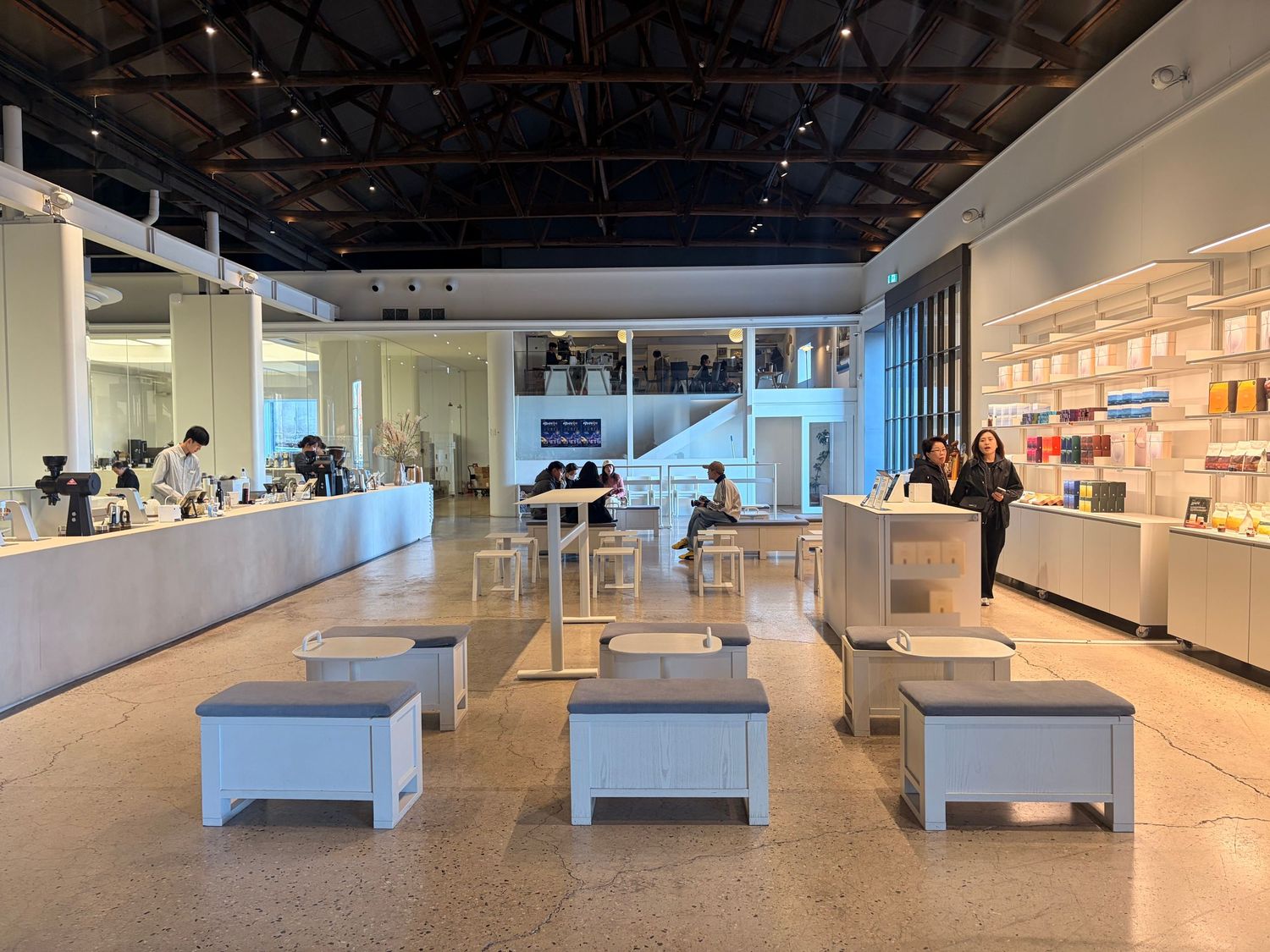
Just inside, a long white coffee bar runs along one wall, with baristas working at the grinders and brewers. Across from it, a retail wall holds bags of beans and boxed drip bags. Low benches with grey cushions fill the middle of the hall under dark exposed roof trusses, and a mezzanine above has more seating. The roastery turned a boat marina into this space in 2021, and the team roasts, cups and brews in full view.
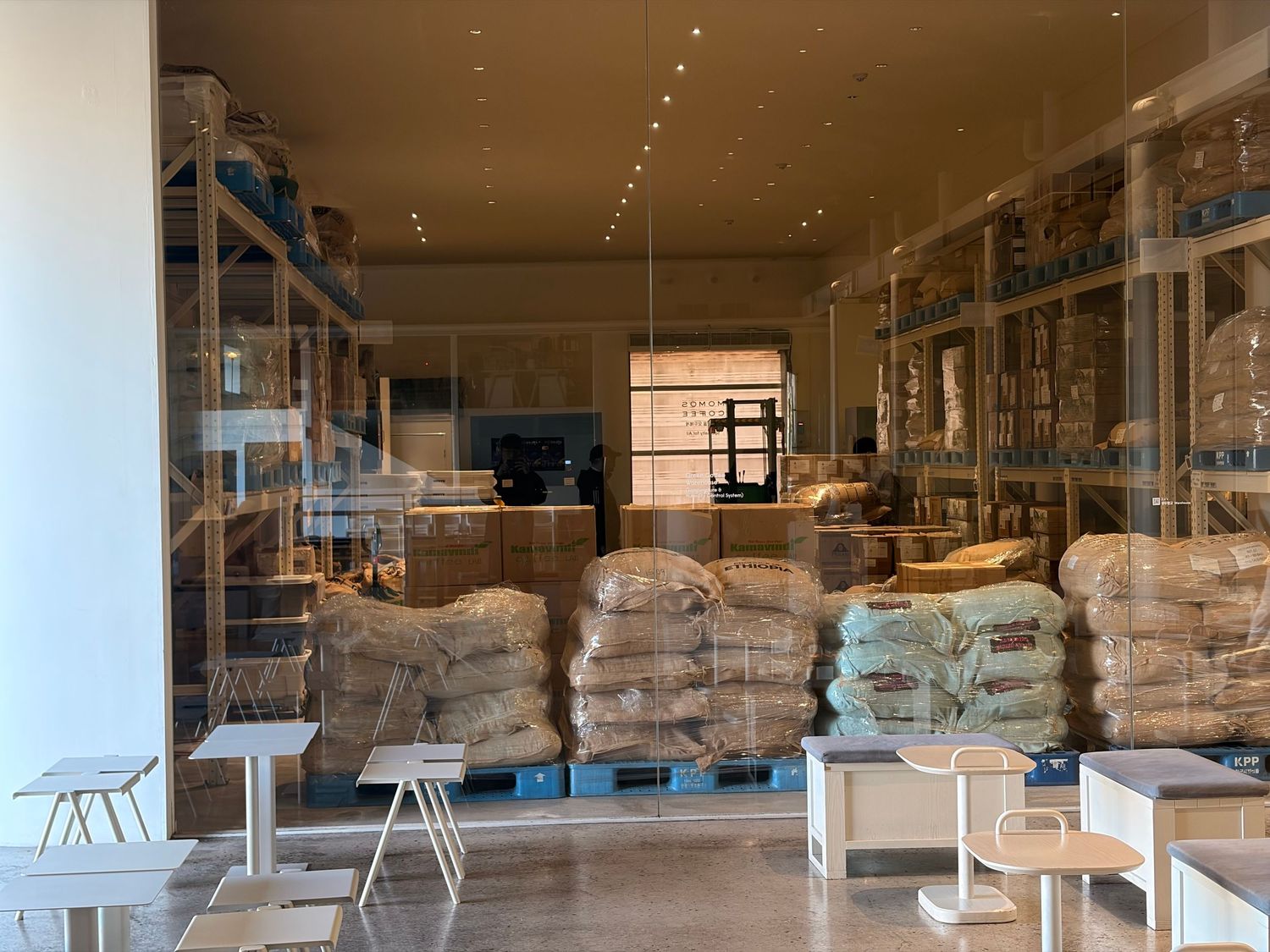
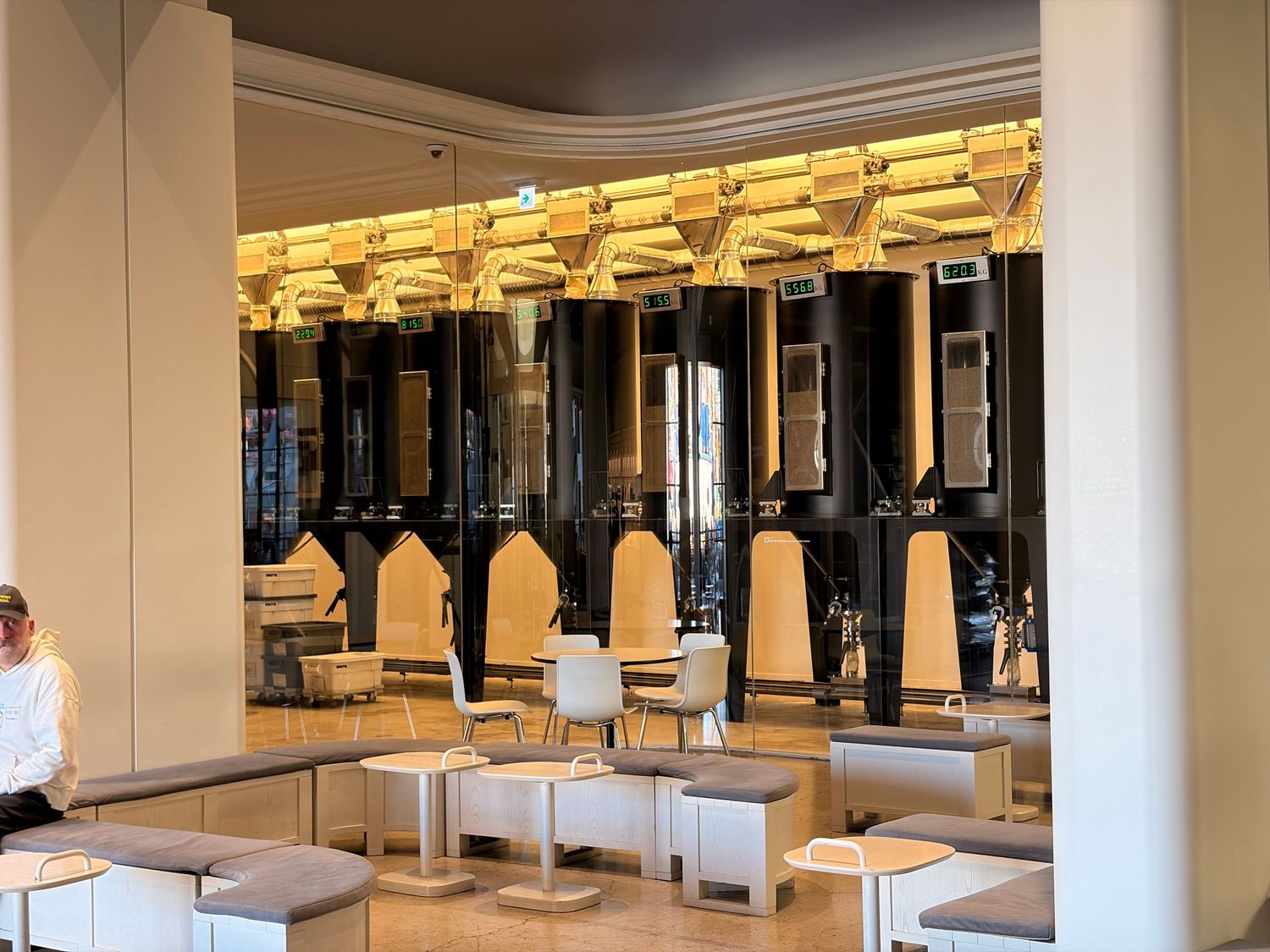
What makes Yeongdo different from a regular café is that the production side is behind glass. You can follow the coffee from bean storage through roasting and packing. One glass wall shows the green coffee warehouse, with pallets of burlap sacks (some marked Ethiopia) and a sign about temperature and humidity control. Beside the seating area, tall black silos with digital kilogram readouts and overhead piping show the bean-handling line.
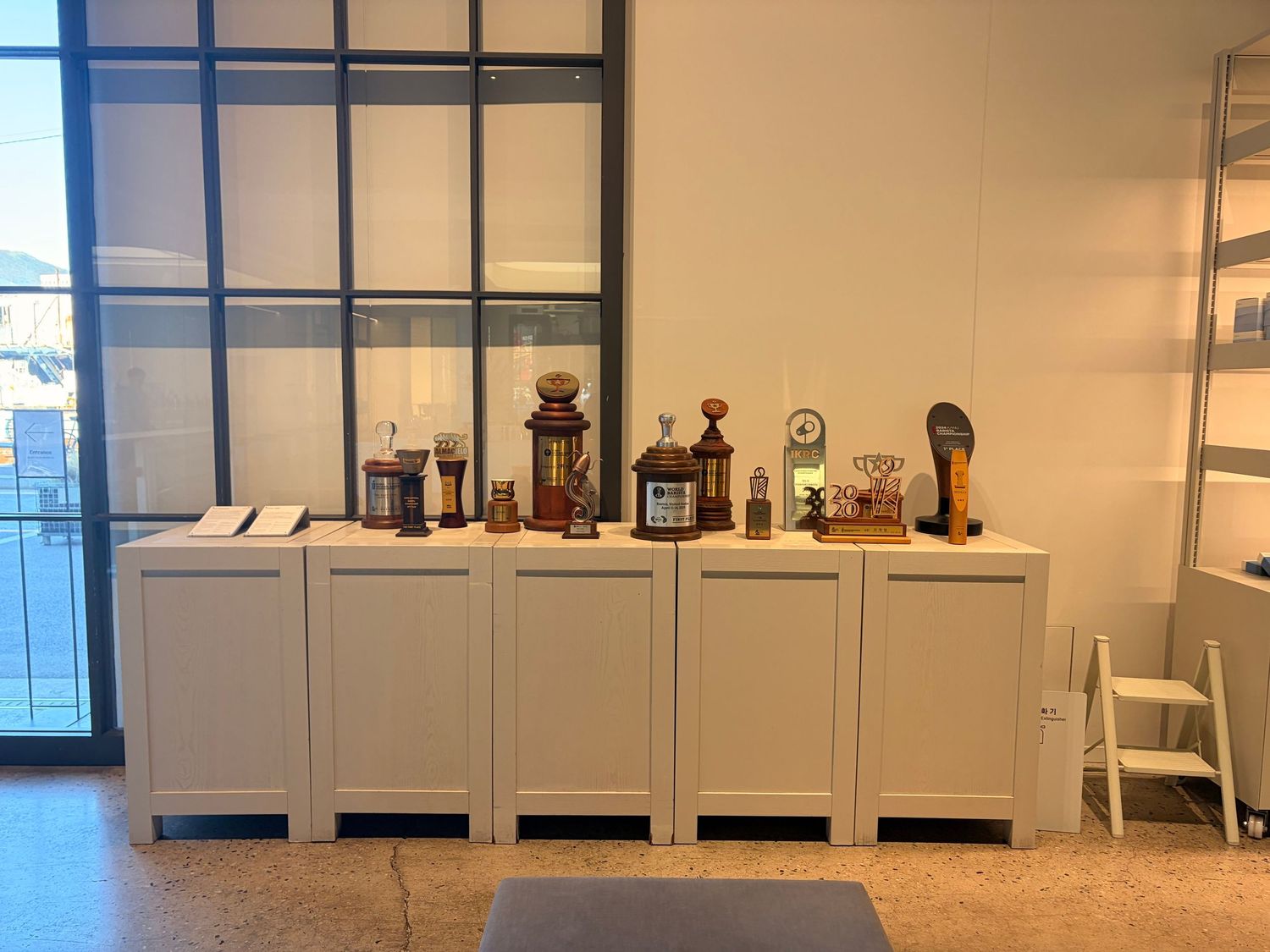
Near the entrance, a trophy display shows the brand’s competition history, including the World Barista Championship trophy from Boston in 2019. Large windows give sea views, and from inside you look straight out at the harbor and its working ships. imginn

What to Order at Momos Coffee Yeongdo (Menu & Prices)
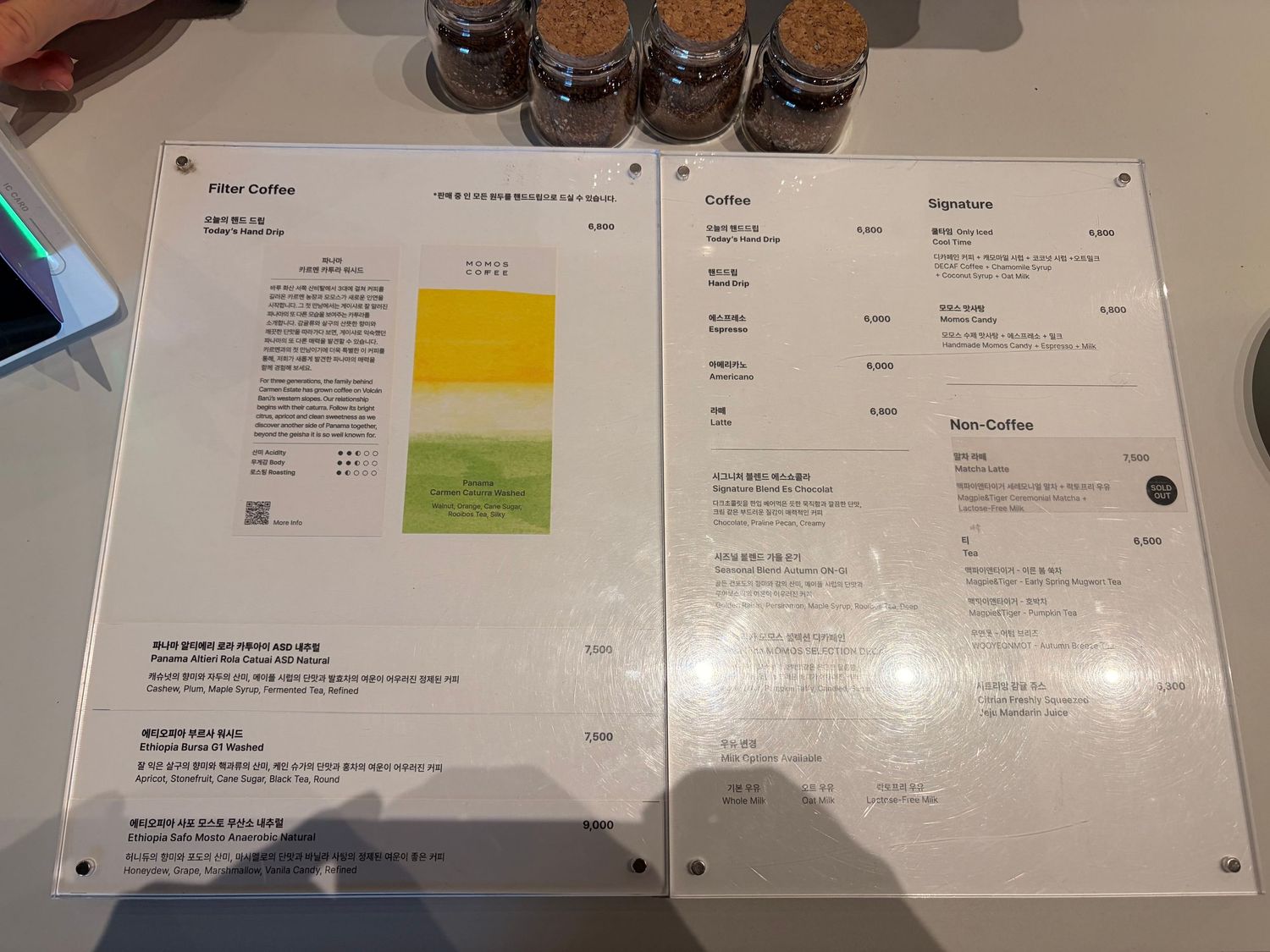
The menu at Momos Yeongdo is short and built around filter coffee.
A note on the board says every bean on sale can be brewed as hand drip, so you can pick almost any coffee in the shop and have it brewed by hand.
Prices below are from my visit and are in Korean won. The menu changes by season, so check the board when you arrive.
Filter Coffee (Hand Drip)
- Today’s Hand Drip, 6,800 : The featured coffee changes. On my visit it was Panama Carmen Caturra Washed, with notes of walnut, orange, cane sugar and rooibos tea, and a silky body. The menu card says the coffee comes from a family farm that has grown coffee on the western slopes of Volcán Barú for three generations. The card also has acidity, body and roast charts and a QR code for more details.
- Panama Altieri Rola Catuai ASD Natural, 7,500 : Cashew, plum, maple syrup and fermented tea, described as refined.
- Ethiopia Bursa G1 Washed, 7,500 : Apricot, stonefruit, cane sugar and black tea, with a round body.
- Ethiopia Safo Mosto Anaerobic Natural, 9,000 : The most expensive filter option, with notes of honeydew, grape, marshmallow and vanilla candy.
Espresso and Milk Drinks
DrinkPrice (KRW)
Espresso : 6,000
Americano : 6,000
Latte : 6,800
The menu also lists two blends. Signature Blend Es Chocolat has chocolate and praline pecan notes with a creamy body. Seasonal Blend Autumn ON-GI has notes of golden raisin, persimmon, maple syrup and rooibos tea. The seasonal blend changes over the year. Milk options are whole milk, oat milk and lactose-free milk.
Signature Drinks
- Momos Candy, 6,800: Handmade Momos candy with espresso and milk. This is the drink I’d order if you want something you can’t get at a regular café.
- Cool Time, 6,800 (iced only): Decaf coffee with chamomile syrup, coconut syrup and oat milk. It’s a good late-afternoon option if you don’t want caffeine.
Non-Coffee Drinks
- Matcha Latte, 7,500: Ceremonial matcha with lactose-free milk. It was sold out when I visited.
- Tea, 6,500: The board listed Early Spring Mugwort Tea, Pumpkin Tea (both Magpie&Tiger) and Autumn Breeze Tea (WOOYEONMOT).
- Freshly Squeezed Jeju Mandarin Juice, 6,300: A good pick if you don’t drink coffee.
Desserts
The dessert case is small and holds only a couple of items.
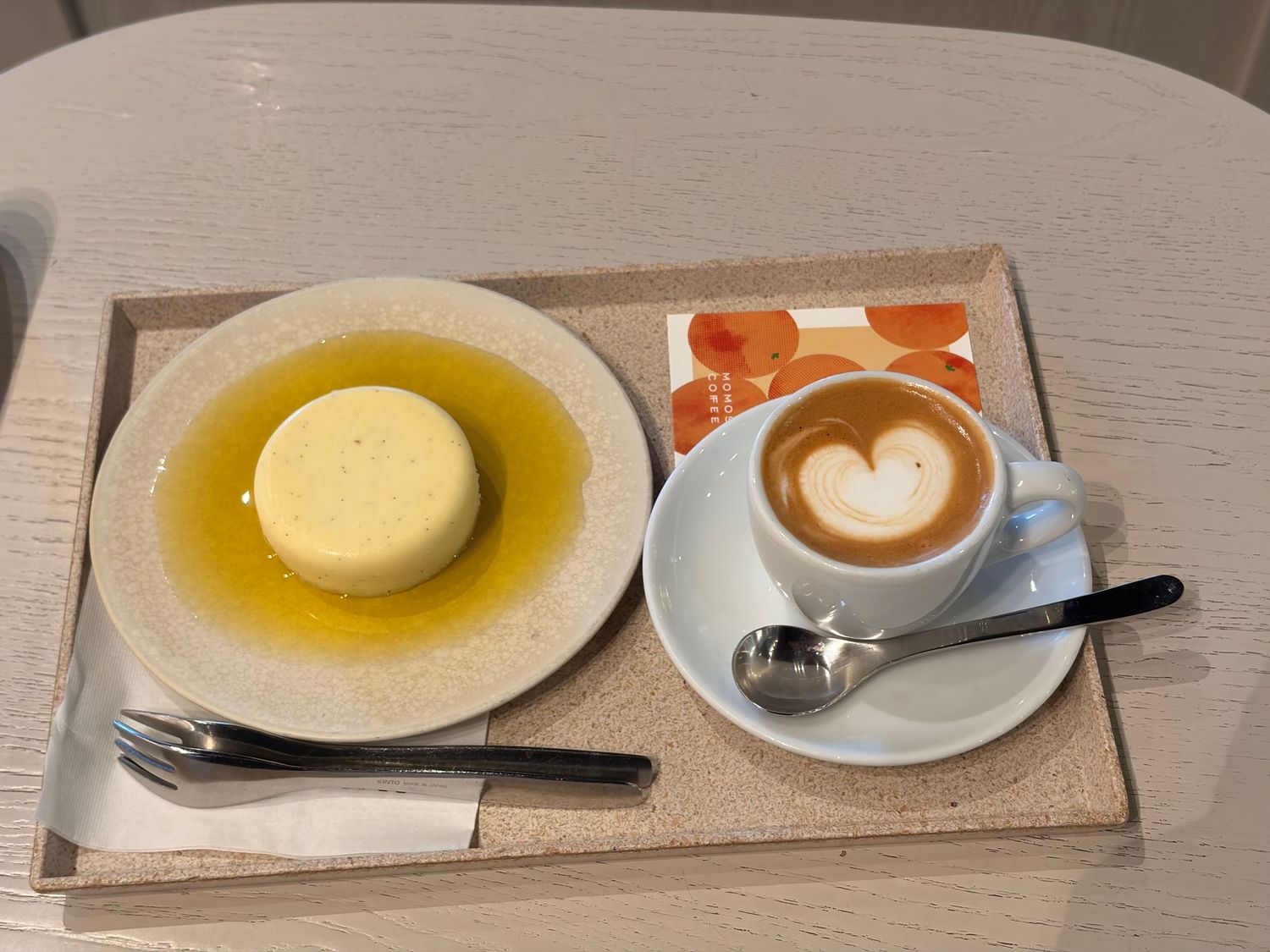
Cheese Terrine, 6,000: A soft, round cheese terrine served on olive oil. The card lists cream cheese, mascarpone, white chocolate and olive oil among the ingredients.
Chocolate Layer Cake, 8,500: A rectangular chocolate cake with a ganache top and thin white layers.


What I Ordered
I ordered the Momos Candy (6,800 won) and the Cheese Terrine (6,000 won), 12,800 won in total. The Momos Candy is an espresso drink with milk and a handmade Momos candy, and it’s only on the menu at the Yeongdo branch. The Cheese Terrine is a small round cream cheese dessert served on olive oil


The Bar Layout: Order, Espresso, Hand Drip
The long white coffee bar is the center of the room, and it seems to be laid out as a simple left-to-right flow.
Ordering (left side). The left end of the bar is where you order and pay. There is a small glass display case with the day’s desserts, a few tablet stands with information about the coffee, and a card reader at the register. Staff take your order here and hand over bags of beans if you’re buying to take home.
Espresso (middle). As you move to the right, the counter turns into the espresso section. Here you see a row of silver espresso machine units, each with its own group head, next to a black grinder. This is where espresso, Americano, latte and the signature milk drinks like the Momos Candy are made.
Hand drip (right side). Further along, the counter becomes the hand drip bar. Glass servers and small drippers sit in a row, with a gooseneck kettle, scales and several grinders with bean hoppers. A barista works at the far end of the bar. Since every bean on the shelf can be ordered as hand drip, this part of the bar handles Today’s Hand Drip and the single-origin filter coffees.
What you see behind the bar. The bar is open to the rest of the roastery. Behind the counter, glass walls show the bean-handling silos and the packing and roasting area, where the team works. A vase of dried pampas grass at the end of the counter adds a soft touch to an otherwise industrial space. Because the whole production line is visible from where you wait for your drink, ordering becomes part of the experience.
Tip: Stand near the hand drip end of the bar while your order is prepared. That’s the best spot to watch the baristas brew and to look into the roasting area.

The Coffee Shop Wall: Drip Bags, Beans, Capsules and More
Across from the bar, a long white wall of shelves turns the roastery into a coffee shop. It’s one of the easiest places to find a souvenir in Yeongdo.
The top shelves hold gift sets in pale boxes with a round white jar illustration, which look good enough to give as presents without extra wrapping. Below them are boxes of drip bags, capsule coffee and coffee sticks in different colors, so you can pick by roast or origin.
The lower shelves hold bags of whole beans in bright, color-coded packaging, with small glass jars set out next to some of them. At the right end, you’ll find cold brew bottles, insulated tumblers and umbrellas.
If you only have a few minutes, drip bags and coffee sticks are the easiest to carry home. If you brew at home, pick up a bag of whole beans.


Drip Bags, Capsules and Gift Sets: What’s on the Shelf
The merchandise wall is sorted by format. You’ll find single-flavor drip bag boxes, variety packs, capsule boxes, gift sets and coffee tea bags. The packaging uses watercolor-style artwork, and each flavor has its own color, so you can pick by color first and read the notes second.
If you only try one, start with Es Chocolat. It’s the easiest to like and a good first cup for people who don’t drink fruity coffee. Choose Fruity Bonbon or Mucho Berry if you like brighter, fruit-forward coffee.
Drip Bags: How They’re Sold
- Single-flavor boxes: Seven bags per box, 70 g for the 10 g bags or 84 g for the 12 g bags, 100% coffee beans. The shelf tags I photographed showed about 11,000 won per box.
- Variety packs: These mix flavors in one box. The 15-bag version has five flavors with three bags each: Fruity Bonbon, Es Chocolat, Busan, Mucho Berry and an Ethiopia single origin. In my photo, one open box shows the colored bags standing side by side. The 10-bag variety box was 22,000 won on the tag.
- Decaf variety box: The blue box on the second shelf. It was 24,000 won on the tag I photographed.
- Shelf life: One year from the production date.
- Brewing: One bag per cup. A common recommendation is about 150 g of water for a 10 g bag.
Capsules
Momos sells capsules in four types: Es Chocolat, Busan, Mucho Berry and Decaf. Each box holds 10 capsules at 5.5 g each, and a box was 8,000 won on the official shop. That matches the shelf tag. The capsules last two years from production. A Korean retailer lists them as Nespresso-compatible, so check your own machine before you buy. The flavors match their drip bag versions.
Gift Sets
The top shelves hold the moon jar gift boxes. The Moon Jar Drip Bag Gift Set has 24 bags. It comes in a wooden box tied with a grey cord, with a matching Momos paper bag next to it for carrying. It’s the most giftable item in the shop.
Which One Should You Buy?
- First visit: A variety pack, so you can taste every flavor.
- Chocolate lover: Es Chocolat.
- Fruity coffee: Fruity Bonbon or Mucho Berry.
- Easy, balanced cup: Busan.
- Evening coffee: The Decaf variety.
- Gift for someone back home: The Moon Jar gift set.
- Own a capsule machine: The capsules, after checking compatibility.


Whole Beans and Coffee Sticks: Take the Roastery Home
On the other side of the shop wall, the shelves hold whole beans and single-serve sticks, with a few lifestyle products at the end. Beside most bags there’s a small glass jar with a cork lid and a label, so you can smell the beans before you buy.
Whole Beans
Sizes. The signature blends come in 200 g, 500 g and 1 kg bags, all 100% coffee beans. The shelf life is one year from production. Check the roast date printed on the bag before you buy.
Seasonal blend. The Autumn ON-GI blend sat on the shelf with its own display card and a tester jar. The shop’s menu describes it with notes of golden raisin, persimmon, maple syrup and rooibos tea. Seasonal blends change through the year, so ask what’s available when you visit.
Single origins and decaf. The lower shelves hold single-origin bags with watercolor labels in yellow-green, pink and orange, including Ethiopian coffees. A blue bag is the Colombia Nariño Washed Decaf, and a bright, colorful line is labeled HAVANA. The single origins rotate by season and lot, so read the card next to each bag.
A gift set. The orange 4 Signature Blends Coffee Set puts one small bag of each blend in a single box, so you can try all four. The shelf tag listed it at about 32,000 won.
Coffee Sticks
If you don’t have a grinder or a brewer at home, the sticks are the easiest way to take the coffee with you.
- Specialty Coffee Mix: Specialty beans are brewed and turned into a powder, so you get the coffee’s flavor in an instant stick. The shelf tag lists the notes as milk caramel, condensed milk, vanilla candy and a creamy finish, so this is the sweet, latte-style option. Pour one stick into a cup with 80 mL of hot water and stir. The 20-stick box holds 200 g, with 10 g per stick. The shop also sells 50-stick and 100-stick boxes, with prices from about 14,000 to 58,000 won.
- Specialty Americano: The black boxes are for people who want unsweetened coffee. Each stick holds 0.9 g of 100% coffee, and the boxes come in 10 or 100 sticks. The shelf life is two years. Follow the directions on the box for how much water to use. imwebimweb
Which one to pick: Take the Coffee Mix if you like a sweet coffee with milk, and the Americano sticks if you drink black coffee. Both are light and easy to pack in a suitcase.
More From the Shop
Beyond coffee, the shelves hold ready-to-drink cold brew in bottles and small cans (regular, Ethiopia and decaf), ceremonial matcha in green tins, tea, MiiR straw bottles, umbrellas and tote bags. These are good last-minute gifts if you’ve already filled your suitcase with coffee.

Heading Back to Seoul With Coffee
After finishing my coffee and dessert, I didn’t leave empty-handed. I picked up a few easy options for the guests who stay at my place on Airbnb, so they can have a good cup of coffee without any fuss: capsules (including Decaf and Busan), a box of Specialty Americano sticks and a box of Coffee Tea Bags.
For myself, I chose a bag of beans from the HAVANA line, an Ethiopia Gesha Village Oma Gesha 1931 Natural (Lot 140), 100 g. The label describes strawberry aroma, orange acidity and plum sweetness, which is exactly what I want from a special bag I’ll brew slowly at home.
With the bag of beans in hand, I headed back to Seoul. If you’re visiting Busan, I recommend leaving some room in your suitcase for the shelf wall at Momos Yeongdo. The sticks, capsules and tea bags are easy to pack, and a single bag of special beans is a good souvenir for yourself.
